
Can free dynamic short links be edited?

Yes, in many cases, Dynamic short links free services can be edited after they have been created. However, whether you can change a short link depends entirely on the service you use and the type of short link you create.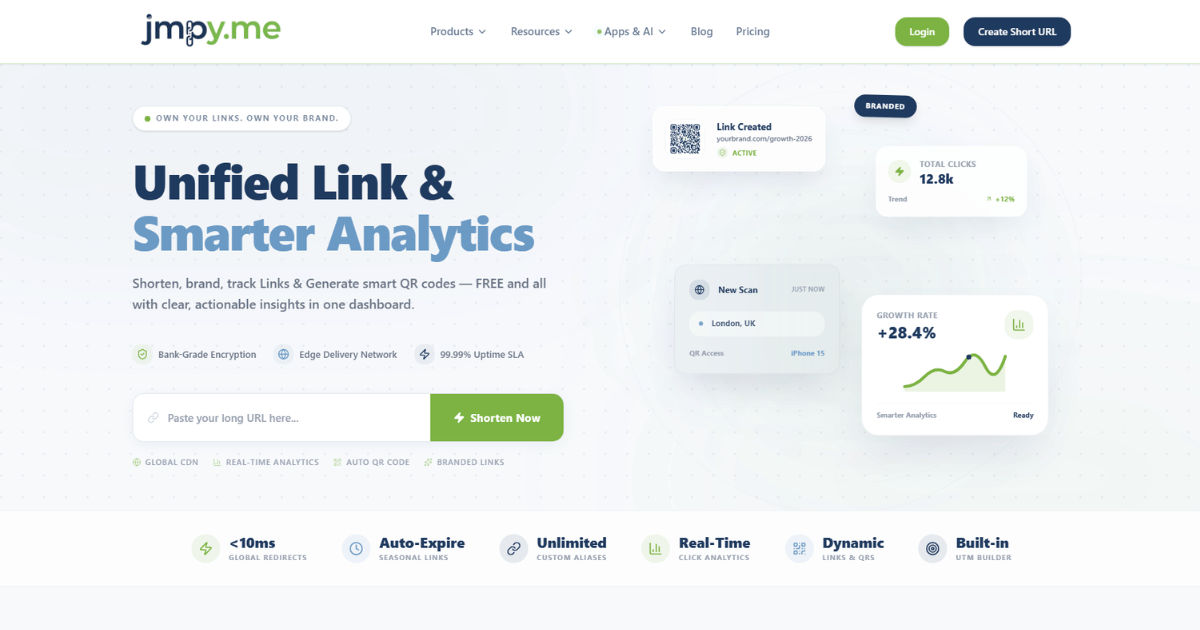
This is one of the biggest advantages of dynamic short links. Instead of changing the short URL every time your destination changes, you can often update the destination address behind the short link. The short link itself stays the same, while the page, website, product, campaign, or resource it points to can be changed.
For example, imagine you print a shortened URL on 5,000 business cards. A few weeks later, you decide that the link should send visitors to a different landing page. If the short link is dynamic and editable, you may be able to update the destination without printing new business cards.
This flexibility makes Dynamic short links free useful for marketing campaigns, social media profiles, QR codes, printed materials, advertisements, email campaigns, and business promotions.
However, there is an important difference between editing the destination URL and editing the short link itself. Some services allow you to change where the link redirects, while others may allow you to change the custom alias, title, tracking settings, or other details. Free plans may also place restrictions on how often or how extensively you can edit a link.
Understanding these differences can help you choose the right link-shortening service and avoid problems later.
What Is a Dynamic Short Link?
A dynamic short link is a shortened web address that redirects visitors to another URL. The important feature is that the destination can usually be changed without changing the short link that people already have.
Consider a simple example.
You create a short link that looks something like a shortened web address. When someone clicks it, they are automatically redirected to your website's landing page.
Later, you decide to move your campaign to another page. With a dynamic short link, you can update the destination in the service's dashboard.
The visitor still uses the same short link.
The link acts as an intermediary between the visitor and the final destination. Instead of permanently connecting the short URL to one specific page, the system uses a redirect that can be managed from an online account.
This is different from a static or fixed short link.
A static short link generally points to one destination that cannot be changed after creation. If the original destination becomes outdated, you may have to create a new shortened URL.
Dynamic links are designed to provide more flexibility.
How Does a Dynamic Short Link Work?
The basic process is relatively simple.
When you create a dynamic short link, the shortening service generates a unique short URL. This URL is connected to a record stored in the provider's system.
That record contains the destination URL.
When someone clicks the short link, the shortening service receives the request and checks which destination is currently associated with that link. It then redirects the visitor to the appropriate webpage.
Suppose you initially connect your short link to a product page.
Later, you change the destination to a special promotional page.
The short URL remains unchanged, but the destination stored in the service's system is updated.
This is why dynamic short links can be edited.
The link itself does not necessarily need to change. Instead, the information controlling where the link sends visitors is modified.
This approach is especially useful when a short link has already been shared widely.
What Parts of a Dynamic Short Link Can Be Edited?
The exact editing options depend on the platform and subscription plan.
In many services, the most important editable feature is the destination URL.
For example, you might change a link from an old product page to a new product page.
Some platforms may also allow you to edit the custom alias. This is the memorable portion of the short URL that appears after the main domain.
For instance, a business might create a short link with a campaign-related word instead of a random collection of letters and numbers.
Other services may let users modify additional settings, including link titles, campaign names, tags, tracking parameters, expiration settings, or analytics configurations.
However, not every platform offers all these features.
The key point is that "editable" can mean different things depending on the provider.
Before creating a link for permanent or printed use, it is important to check exactly what the service allows you to change.
Can You Change the Destination URL?
In most dynamic link systems, changing the destination is the main reason the feature exists.
Suppose you create a short link for a seasonal sale.
At first, the link sends visitors to a page promoting a summer discount.
When the sale ends, you could update the destination to a new promotional page. Visitors who click the same short URL will then be redirected to the new destination.
This is particularly useful for links printed on materials that are difficult or expensive to replace.
Examples include business cards, posters, brochures, product packaging, signs, flyers, menus, and printed advertisements.
Without a dynamic link, changing the destination might require creating a completely new short URL and updating every place where the original link appears.
With an editable dynamic link, the same short URL can continue to work.
Can You Edit the Short URL Itself?
This is a different question.
Some services allow you to edit the destination but do not allow you to change the short URL after creation.
Other platforms may allow you to customize the short link when you create it but prevent you from changing the custom alias later.
For example, imagine you create a custom short link for a marketing campaign.
You might be able to choose the word used in the link during the creation process. Once the link is published, however, that custom alias may become permanently associated with the link.
This limitation exists for practical reasons.
Changing the short URL itself could cause confusion. People may already have saved the original link, shared it on social media, or printed it on marketing materials.
Therefore, many services treat the short URL as a permanent identifier while allowing the destination behind it to change.
If branding is important, choose your custom alias carefully before publishing the link.
Are Free Dynamic Short Links Editable?
Some free services provide editable dynamic links, while others offer only basic static shortening.
This is where users need to be careful.
The word "free" does not automatically mean that every feature is included.
A free plan may allow you to create a dynamic link but restrict the number of links you can manage. Another service might allow editing but limit analytics or advanced tracking.
Some platforms may offer dynamic editing only during a trial period or as part of a paid subscription.
Others may provide a permanent free option with basic functionality.
The best approach is to review the service's current feature list before relying on it for an important project.
Pay particular attention to whether the free plan includes destination editing.
Also check whether links remain active if you stop using the service or if you move to a different plan.
These details can make a significant difference when using a short link for long-term purposes.
Why Is Editing a Dynamic Short Link Useful?
The biggest benefit is flexibility.
Digital content changes frequently.
A business might redesign its website. A product might move to a new page. A promotional campaign might end. An event registration page might be replaced by a photo gallery after the event.
If the original short link is printed or widely distributed, changing it everywhere can be difficult.
A dynamic short link solves much of this problem.
You can keep the same public-facing URL while updating the destination.
This means one short link can potentially support multiple stages of a campaign.
For example, a company might use the same printed QR code throughout an entire product launch.
Before launch, it could lead to a product announcement.
During launch, it could lead to a purchase page.
After launch, it could lead to customer support or product information.
The printed code does not need to change.
The destination behind it can be updated.
Dynamic Short Links and QR Codes
Dynamic short links are closely connected to QR codes.
A QR code typically contains a URL. When someone scans it, their device opens that URL.
If the QR code contains a dynamic short link, the destination behind that link may be changed later.
This makes dynamic QR codes particularly valuable for printed marketing materials.
Imagine a restaurant printing a QR code on thousands of menus.
The restaurant might initially use it for an online menu. Later, the same QR code could direct customers to a reservation page or special offer.
If the QR code points directly to a fixed URL, changing the destination may require replacing the QR code.
If it uses an editable dynamic short link, the destination can often be updated without changing the printed code.
This can save time and reduce printing costs.
However, the QR code itself does not become magically editable. The underlying short link must be dynamic and managed through a service that supports destination changes.
What Happens When You Edit a Dynamic Short Link?
When you edit a dynamic short link, the short URL generally remains unchanged.
The system updates the destination associated with that link.
Suppose someone has bookmarked the short URL.
After you change the destination, the bookmark still opens the same short URL. However, the visitor is redirected to the newly selected destination.
The same applies to links shared through messages, social media, documents, and printed materials.
This is one of the most useful features of dynamic links.
You do not have to contact everyone who received the original link and send them a replacement.
Instead, you update the destination from your management dashboard.
There may be a short delay before changes take effect in some systems, although many services update redirects quickly.
Can You Edit a Dynamic Link Multiple Times?
In many cases, yes.
A dynamic short link can often be updated more than once.
For example, a company could change a link several times throughout a year.
In January, it might point to a New Year promotion.
In March, it could lead to a spring campaign.
In June, it might direct users to a summer sale.
The same short URL can continue to be used.
However, the number of changes you can make may depend on the service's policies.
Some free services may have limits on link management, while paid plans may provide more flexibility.
Before depending on a link for a long-term campaign, check the provider's terms and features.
Can You Edit a Dynamic Short Link After Sharing It?
Usually, this is one of the main reasons to use a dynamic link.
Once a dynamic short link has been shared, you can often update its destination.
This can be useful when a campaign changes unexpectedly.
Imagine a company publishes a short link on social media. The link initially leads to a landing page.
A few days later, the company discovers that the landing page has an error.
If the link is dynamic, the company can redirect visitors to a corrected page while the original short URL remains unchanged.
This can prevent lost traffic.
It also avoids the need to delete and repost every previous social media update.
However, users should remember that editing a destination does not change historical links into something completely different in every context.
People may have expectations about where a link leads. If you repeatedly change a link without clear communication, visitors could become confused.
Dynamic editing should therefore be used responsibly.
Can You Change a Dynamic Link Without Changing the QR Code?
Yes, this is one of the most common uses of dynamic links.
A QR code can be created using a dynamic short URL.
The QR code stores the short URL rather than the final destination.
When someone scans the QR code, the short link redirects them to the current destination.
If you update the destination in your account, the QR code can continue working.
This is particularly valuable for physical marketing.
Consider a poster displayed in a busy shopping center.
Replacing the poster every time the destination changes could be expensive.
With a dynamic QR code, the same printed code can potentially be used for multiple campaigns.
This is why businesses often prefer dynamic links for long-term printed materials.
Are Free Dynamic Short Links Reliable?
Reliability depends on the provider.
A short link is only useful if the service behind it continues operating.
When you use a free service, you should consider how established the provider is and whether the service has a clear long-term business model.
A free service may be perfectly reliable for casual use.
However, if you are printing a link on permanent signage or packaging, the decision requires more thought.
If the shortening provider shuts down, changes its policies, or removes your account, the short link may stop working.
This is known as link rot.
The problem is not necessarily caused by the destination website. The short-link provider itself may be responsible for the redirect.
For important business applications, it may be worth considering a reputable provider or using a custom domain that your organization controls.
What Are the Risks of Free Dynamic Short Links?
Free services can be convenient, but they are not always risk-free.
One concern is service availability.
If the provider experiences a long-term outage, your links may become inaccessible.
Another concern is account restrictions.
A free plan may have limits that are not obvious when you first create an account.
For example, you may later discover that advanced analytics, custom domains, or certain editing features require payment.
There can also be concerns about trust.
Visitors sometimes hesitate before clicking unfamiliar shortened links because they cannot immediately see the final destination.
For this reason, businesses should use short links carefully and avoid sending users to unexpected pages.
A recognizable branded short domain can help improve trust.
What Happens If the Short Link Service Closes?
This is one of the most important questions to consider.
If a shortening service shuts down, the links it manages may stop functioning.
This can be a serious issue if those links appear on permanent materials.
For example, imagine a business printing a dynamic QR code on product packaging.
If the service behind the QR code disappears, customers may scan the code and receive an error.
This is why long-term projects should not rely blindly on an unknown free service.
Before choosing a provider, consider its reputation, longevity, support options, and business model.
It is also wise to keep a record of all your original destination URLs.
This does not restore a broken short link, but it ensures that you know exactly where each link was supposed to lead.
Can You Edit Free Dynamic Links for Marketing Campaigns?
Yes, this is one of their most practical uses.
Marketing campaigns often change quickly.
A company may launch a campaign with one landing page and later move visitors to a product page, registration form, or special offer.
Dynamic links allow marketers to make these changes without replacing the public-facing URL.
They can also help organize campaigns.
A company could create separate links for different advertisements, printed materials, or marketing channels.
The destinations can be updated when campaigns change.
Analytics may also help determine how many people click each link and where those visitors come from, depending on the service.
However, analytics features are often more limited on free plans.
If detailed campaign measurement is important, a paid service may provide better tools.
Can Dynamic Short Links Be Edited for Social Media?
Yes.
Social media is another area where editable links can be useful.
A business might post a short link on a profile or in promotional content.
If the destination changes, the business can update the link rather than creating a completely new public URL.
This is especially useful for profile bios.
For example, a creator might use one short link to direct followers to a current promotion.
After the promotion ends, the destination can be changed to a new offer.
The link in the profile remains the same.
However, users should remember that social media platforms sometimes handle links differently. Some platforms may cache previews or display information based on the original destination.
Changing the destination does not always guarantee that every visual preview will immediately update.
Can You Edit a Dynamic Link After Printing It?
Yes, provided the link is genuinely dynamic and the service still supports editing.
This is one of the strongest reasons to use dynamic links.
Printed materials are difficult to update.
A website can be changed within minutes, but a printed brochure may remain in circulation for months.
A dynamic short link creates a layer of flexibility between the printed material and the final webpage.
You can potentially change the destination while leaving the printed URL unchanged.
This is useful for:
-
Business cards
-
Brochures
-
Posters
-
Flyers
-
Product packaging
-
Menus
-
Event banners
-
Billboards
-
Retail displays
-
Instruction manuals
The more expensive or permanent the printed material is, the more valuable this flexibility becomes.
What Should You Check Before Creating a Free Dynamic Short Link?
Before using a free service, investigate its editing capabilities.
First, confirm that the link is actually dynamic.
Do not assume that every shortened URL can be edited.
Second, check whether destination editing is available on the free plan.
Third, determine whether you can edit the link as many times as necessary.
Fourth, check whether the link has an expiration date.
Fifth, understand what happens if you stop using the account.
Sixth, review whether analytics are included.
Seventh, check whether the service allows custom domains if branding is important.
Finally, consider the provider's reputation.
A free service may save money today but create problems later if the service disappears.
How to Choose the Right Dynamic Short Link Service
The right service depends on how important the link is.
For casual personal use, a basic free service may be enough.
For business campaigns, you may want stronger management features.
For printed materials, long-term reliability should be a priority.
For marketing campaigns, analytics may be important.
For branding, a custom domain may be useful.
For QR codes, destination editing is especially important.
Think about the entire life cycle of the link.
Ask yourself where the link will be published, how long it will be used, and how expensive it would be to replace it.
A short link that appears in a temporary social media post has different requirements from a link printed on thousands of product boxes.
Choosing based on the actual use case can prevent problems later.
Dynamic Short Links Versus Static Short Links
The difference between dynamic and static links is mainly flexibility.
A static short link generally has a fixed destination.
If you want to send visitors somewhere else, you may need to create another short link.
A dynamic short link allows the destination to be changed.
This makes dynamic links more suitable for campaigns and long-term use.
Static links can still be useful for simple purposes.
If you have a permanent webpage that is unlikely to change, a fixed link may be sufficient.
However, if the link will be printed, shared widely, or used for a campaign that may evolve, dynamic functionality offers more flexibility.
The choice should depend on your future needs rather than simply choosing the shortest URL.
Does Editing a Dynamic Link Affect Existing Clicks?
Changing the destination generally affects future clicks.
Someone who clicks the link after you update it will normally be sent to the new destination.
The original click history may remain available in analytics, depending on the service.
However, the exact behavior varies.
Some platforms may separate analytics by destination or campaign settings. Others may keep all activity associated with the same short link.
If detailed reporting is important, review how the provider handles historical data before making frequent changes.
It can be helpful to record when major destination changes occur.
This allows you to understand your analytics more accurately.
For example, if traffic suddenly changes, you can determine whether the change was related to a new destination or a change in your marketing activity.
Does Editing a Dynamic Short Link Hurt SEO?
Generally, a short link itself is not a direct SEO strategy.
Its primary purpose is redirection and link management.
When a dynamic short link redirects visitors to a webpage, the final destination is what matters most for the visitor's experience.
However, using shortened URLs excessively can create unnecessary complexity.
For SEO purposes, it is usually better to use direct, descriptive URLs on your own website when possible.
Short links are most useful in situations where a shorter address provides a practical benefit.
Examples include social media, printed materials, QR codes, advertising, and offline marketing.
They should not be treated as a replacement for a well-structured website.
Are Dynamic Short Links Good for Long-Term Use?
They can be, but the service matters.
A dynamic link is technically suitable for long-term use because the destination can be updated.
The real question is whether the shortening service will remain available.
For long-term projects, businesses should think about ownership and control.
A custom short domain can provide greater control than relying entirely on a third-party domain.
For example, if a company owns its short-link domain and manages the redirects through its own infrastructure, it may have more control over the links.
This approach requires more technical knowledge but can be valuable for organizations that need long-term stability.
For many users, however, a reputable third-party service provides a reasonable balance between convenience and reliability.
What Is the Best Use of a Free Dynamic Short Link?
A free dynamic short link is most useful when you need flexibility but do not require advanced enterprise features.
It can be a practical choice for small businesses, freelancers, students, creators, event organizers, and individuals.
It can also work well for testing a campaign before investing in a paid platform.
For example, you might use a free dynamic link to test whether people respond to a QR code printed on a small batch of promotional materials.
If the campaign performs well, you can later move to a more advanced solution.
The key is to understand the limitations before committing.
Free links are convenient, but important projects deserve careful planning.
How to Avoid Problems With Editable Short Links
The first step is to maintain access to the account that controls your links.
If several people manage a business account, make sure more than one trusted person knows how the system works.
Keep a record of your short links and their original destinations.
If you change a destination, document the change.
Avoid using an unknown service for permanent materials without researching it first.
Also, test every link after creating or editing it.
A simple test can reveal problems before your audience discovers them.
For QR codes, scan the code using multiple devices if possible.
Check the destination on mobile because most QR code traffic comes from smartphones.
Good link management is not complicated, but it requires some basic organization.
Frequently Asked Questions About Free Dynamic Short Links
Can I edit a free dynamic short link after creating it?
Often, yes. If the service provides dynamic link functionality, you can usually edit the destination URL after creation. However, free plans may have restrictions, so always check the provider's specific terms.
Does editing change the short URL?
Usually, no. The primary advantage of a dynamic short link is that the public short URL remains the same while the destination changes.
Can I edit a short link after printing it?
Yes, if it is a dynamic link that supports destination editing. This is especially useful for QR codes, brochures, posters, packaging, and other printed materials.
Can I change the custom alias?
It depends on the service. Some platforms allow custom aliases to be edited, while others permanently lock them after creation.
Do dynamic short links expire?
Some do and some do not. Expiration policies depend on the provider and plan. Always check this before using a link for long-term purposes.
Are free dynamic short links safe?
They can be safe when provided by a reputable service. However, users should research the provider, understand its policies, and avoid relying on unknown services for critical long-term links.
Can I change the destination multiple times?
Many dynamic link services allow repeated destination changes. However, some free plans may impose limits or restrict advanced management features.
What happens if the link service shuts down?
The short link may stop working because the redirect is controlled by the service. This is one of the main risks of relying on third-party free link-shortening platforms.
Are dynamic short links better than static short links?
For campaigns, QR codes, printed materials, and changing destinations, dynamic links are usually more flexible. For a simple permanent destination, a static link may be sufficient.
Should businesses use free dynamic short links?
Small businesses may find free services useful for basic campaigns. However, businesses should consider reliability, analytics, branding, link ownership, and long-term availability before choosing a free solution.
Can I track clicks on a dynamic short link?
Many services provide click tracking and analytics. The exact information available depends on the provider and whether analytics are included in the free plan.
Conclusion
So, can free dynamic short links be edited?
In many cases, yes.
The main purpose of a dynamic short link is to give you control over the destination after the link has been created. Instead of changing the public URL every time your content changes, you can update the destination behind the link.
This can be extremely useful for businesses, marketers, creators, event organizers, and anyone who uses links in printed or permanent materials.
However, there is an important distinction between editing the destination and editing the short URL itself.
Most dynamic systems focus on destination editing. The short URL remains unchanged, while the page it points to can be updated. Some services offer additional editing options, such as custom aliases, tracking settings, campaign information, or expiration controls.
Free services can provide this functionality, but their features vary widely.
Some offer editable dynamic links at no cost. Others may restrict editing, analytics, the number of links, or long-term usage. A service that appears free at first may also place important features behind a paid plan.
Therefore, you should always check the exact features available before creating a link that will be printed or widely distributed.
The biggest advantage of a dynamic link is flexibility.
If you print a QR code on thousands of brochures, you may not want to replace those brochures every time your campaign changes. If the QR code points to an editable dynamic short link, you can potentially update the destination while keeping the same printed code.
The same principle applies to business cards, posters, packaging, menus, advertisements, and social media profiles.
The biggest risk is dependence on the service provider.
A free link is only useful as long as the platform continues to operate and maintain your redirect. If the provider closes, changes its policies, or removes your account, the link may stop working.
For casual projects, this risk may be acceptable.
For important business campaigns and permanent printed materials, it is worth choosing a reputable provider and considering whether a custom domain or more controlled solution would be better.
Ultimately, Dynamic short links free can be a practical and flexible solution when you need to change destinations without replacing the original short URL. They are particularly valuable when links are already printed, shared, or distributed to a large audience.
Before creating one, think beyond the immediate need. Consider how long you will use the link, whether you may need to change its destination, how important analytics are, whether the service supports editing on its free plan, and what happens if you stop using the platform.
When chosen carefully, an editable dynamic short link can save time, reduce costs, simplify campaign management, and make digital content much easier to maintain.
The most important lesson is simple: do not choose a short link service only because it is free. Choose one that provides the editing capabilities, reliability, control, and long-term stability your specific use case requires.