
What does an embroidery digitizing company do?

Embroidery has long been a popular way to decorate clothing, uniforms, caps, bags, jackets, and promotional products. However, turning a regular logo or artwork into a clean embroidered design requires more than simply placing an image into an embroidery machine. 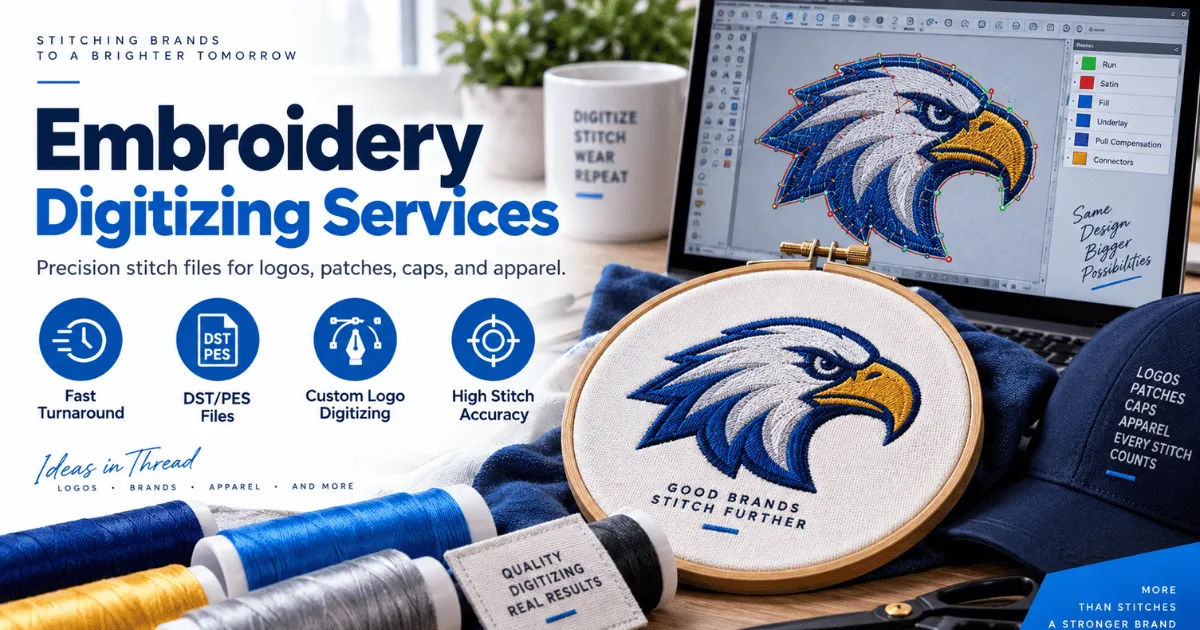 This is where an embroidery digitizing company becomes important. Such a company converts artwork into a specialized embroidery file containing instructions that an embroidery machine can understand and follow.
The digitizing process combines creativity, technical knowledge, and careful planning. A professional digitizer studies the artwork, chooses appropriate stitch types, determines stitch directions, adjusts densities, creates underlay, and organizes the stitching sequence. The goal is to make the final embroidered design attractive, durable, readable, and suitable for the selected fabric.
For businesses, clothing manufacturers, promotional companies, fashion brands, sports teams, and individual customers, professional digitizing can make a major difference. A well-prepared embroidery file can produce smooth lettering, clean outlines, balanced stitching, and fewer production problems.
This comprehensive guide explains what an embroidery digitizing company does, how the process works, what services it provides, and why professional digitizing matters.
What Is Embroidery Digitizing?
Embroidery digitizing is the process of converting artwork into a digital stitch file that an embroidery machine can read. A normal JPG, PNG, PDF, or similar image does not automatically contain the information required by an embroidery machine.
An embroidery machine needs specific instructions. These instructions tell the machine where to place stitches, which direction those stitches should follow, when to change colors, where to stop, and when to move from one section to another.
A digitizer creates these instructions using specialized embroidery software.
The process is not simply tracing an image. The digitizer must understand how thread behaves on different materials. Fabric can stretch, shift, compress, or pull during stitching. Therefore, the digital design must be adjusted to compensate for these physical effects.
What Does an Embroidery Digitizing Company Do?
An embroidery digitizing company provides professional services that transform artwork into production-ready embroidery files.
The work usually begins when a customer submits a logo, drawing, illustration, text design, or other artwork. The digitizer reviews the design and determines how it should be converted into stitches.
The company may then create the embroidery file, test the design, make revisions, and deliver the appropriate file format.
Professional digitizers also consider the final product. A design intended for a cotton shirt may require different settings from one intended for a structured cap. Likewise, a large jacket-back design cannot always be reduced to a small chest logo without modification.
This is why professional digitizing involves both digital design skills and practical embroidery knowledge.
How the Embroidery Digitizing Process Works
Artwork Assessment
The first step is reviewing the customer's artwork.
The digitizer examines the size, shape, colors, lettering, fine details, and overall structure. They also consider whether the artwork is suitable for embroidery.
Some details that look excellent on a computer screen may not work well with thread. Very thin lines, tiny text, narrow gaps, and extremely small shapes can disappear when stitched.
A professional digitizer identifies these potential problems before creating the final file.
Choosing Stitch Types
Different parts of an embroidery design require different stitch types.
Satin stitches are commonly used for borders, lettering, narrow shapes, and smooth columns. Their closely arranged stitches can create a polished appearance.
Fill stitches are useful for covering larger areas. They create a textured surface while efficiently filling broad shapes.
Running stitches are often used for thin lines, outlines, and small details.
A skilled digitizer chooses the appropriate stitch type based on the shape and purpose of each element.
Setting Stitch Direction
Stitch direction is another important part of digitizing.
If all stitches run in exactly the same direction, the embroidery may appear flat or visually unbalanced. Changing stitch angles can add structure and help different parts of the design stand apart.
Stitch direction can also affect how light reflects from the thread. Properly planned directions can make letters, leaves, symbols, and other shapes appear more attractive.
Creating Underlay
Underlay consists of foundation stitches placed beneath the visible stitches.
Its purpose is to stabilize the fabric and provide a suitable base for the top stitching. It can help prevent shifting, improve coverage, and reduce problems caused by fabric movement.
Different fabrics may require different underlay approaches. Lightweight materials, stretchy garments, and thick fabrics do not always respond to stitching in the same way.
Adjusting Stitch Density
Stitch density refers to how closely stitches are placed together.
Too little density may cause gaps or allow the fabric to show through. Too much density can create unnecessary bulk, increase thread usage, and potentially damage the fabric.
A professional digitizer selects a suitable density according to the design, thread, fabric, and intended size.
Planning the Stitch Sequence
The order in which different parts of the design are embroidered is also important.
A carefully planned sequence can reduce unnecessary thread trims, jumps, and color changes. It can also help prevent distortion and improve production efficiency.
The digitizer determines which elements should be stitched first and which should be completed later.
What File Formats Does a Digitizing Company Provide?
Different embroidery machines use different file formats.
Common formats include DST, PES, EXP, JEF, VP3, HUS, and others. The appropriate format depends on the embroidery machine being used.
A professional service generally asks for the machine format before preparing the final file. Providing the wrong format can make the design unusable on a particular machine.
In some cases, customers may request multiple formats so the same design can be used with different embroidery systems.
Why Artwork Quality Matters
The quality of the original artwork can affect the digitizing process.
High-quality artwork makes it easier to identify shapes, colors, edges, and fine details. However, even a low-resolution image can sometimes be digitized successfully if the underlying design is clear.
The digitizer may need to recreate certain elements manually instead of simply converting the image automatically.
This is particularly important for business logos. A logo often contains precise lettering and specific proportions that need to remain consistent.
Does Digitizing Automatically Convert an Image?
Not necessarily.
Automatic image conversion tools can produce basic embroidery files, but professional results usually require human adjustment.
An automated system may recognize shapes, but it does not always understand how thread should behave on fabric. It may create excessive density, poor stitch sequencing, awkward corners, or unsuitable stitch types.
Human digitizers can make decisions based on the design and production requirements.
This human involvement is one reason professional embroidery files can look significantly better than automatically generated files.
How Companies Handle Different Fabrics
One of the major responsibilities of an embroidery digitizing company is adapting designs to different materials.
Cotton
Cotton is commonly embroidered and usually provides a relatively stable surface. However, lightweight cotton may still require careful stabilization.
Polyester
Polyester garments can work well with embroidery but may require attention to puckering and fabric movement.
Caps
Caps have curved surfaces and limited flexibility. Designs for caps must be planned differently from flat garment designs.
Jackets
Jackets can involve thicker materials, lining, and structured surfaces. Digitizing settings need to account for these characteristics.
Stretch Fabrics
Stretchable materials can move during stitching. Proper underlay, density, and compensation become especially important.
What Is Pull Compensation?
Pull compensation is a technique used to account for the tendency of embroidery stitches to pull fabric and nearby elements toward themselves.
Without proper compensation, certain shapes may become narrower than intended.
A professional digitizer anticipates this behavior and adjusts the design accordingly.
This can help letters and shapes maintain their intended appearance after stitching.
How an Embroidery Digitizing Company Handles Small Text
Small lettering is one of the more difficult aspects of embroidery.
A font that looks readable at a large size may become unclear when reduced. Individual stitches have physical limitations, so extremely tiny letters cannot always reproduce every detail from the original artwork.
A digitizer may modify the lettering by simplifying shapes, changing stitch types, adjusting spacing, or selecting a more embroidery-friendly font.
The objective is not merely to reproduce the digital artwork but to make the embroidered result readable.
Digitizing for 3D Puff Embroidery
Some digitizing companies also create files for 3D puff embroidery.
This technique uses foam beneath selected areas to create a raised appearance. It is particularly popular for caps, sportswear, streetwear, and branded apparel.
3D puff requires specialized planning. The digitizer must consider stitch direction, borders, density, foam coverage, and how the machine will remove or compress the foam.
A design that works well as ordinary flat embroidery may need significant changes before it can be used for puff embroidery.
Quality Testing and Sample Stitching
A professional digitizing process does not always end when the digital file is created.
Testing can reveal problems that are difficult to predict from software alone.
A sample stitch-out allows the digitizer or production team to examine thread coverage, lettering, density, registration, borders, and overall appearance.
If problems are found, the file can be adjusted.
This testing stage is especially useful for important commercial projects where consistency matters.
How Digitizing Improves Business Logos
Businesses often use embroidered logos on uniforms, shirts, jackets, caps, bags, and promotional merchandise.
A professionally digitized logo can help maintain a consistent brand appearance across different products.
The digitizer can create files that are optimized for different sizes and applications. For example, a small chest logo may require different treatment from a large jacket-back version.
Instead of forcing one file to work everywhere, businesses can use appropriately prepared versions.
Why Professional Digitizing Matters
Professional digitizing can save time and reduce production problems.
A poorly created file may result in excessive thread breaks, puckering, distorted shapes, poor registration, unnecessary trims, or uneven coverage.
These problems can waste fabric, thread, machine time, and labor.
A well-prepared embroidery file helps the machine operate more efficiently while improving the appearance of the finished product.
For businesses producing embroidery regularly, these improvements can have a meaningful effect on overall production quality.
What Information Should Customers Provide?
Customers can make the digitizing process easier by providing useful information.
Important details may include the original artwork, desired embroidery size, fabric type, garment type, thread colors, machine format, and intended application.
For example, telling the digitizer that a logo will be placed on a curved cap gives them valuable information.
Similarly, explaining that a design will be stitched on a stretchy sports garment allows the digitizer to consider the material when preparing the file.
Clear requirements can reduce revisions and help produce a more suitable result.
How Long Does Digitizing Take?
The time required depends on the complexity of the artwork.
A simple logo containing basic lettering may be completed relatively quickly. A detailed illustration with many colors, small elements, and complicated shapes requires more work.
Rush services may also be available from some providers, although the availability and pricing can vary.
Customers should focus not only on speed but also on the quality of the resulting file.
How Much Does Embroidery Digitizing Cost?
Pricing varies according to design complexity, size, stitch count, number of colors, turnaround time, and required services.
Simple logos generally require less work than detailed artwork.
Some providers charge based on design complexity, while others may consider stitch count or the number of elements involved.
It is useful to ask what is included in the price. Some services may include revisions, multiple file formats, or sample testing, while others may charge separately for these options.
Common Mistakes in Embroidery Digitizing
Several mistakes can reduce embroidery quality.
One common mistake is using excessive stitch density. Too many stitches can make the design unnecessarily heavy.
Another problem is poor stitch sequencing. Unnecessary jumps and trims can slow production.
Ignoring fabric characteristics is another major issue. A design created without considering the material may produce puckering or distortion.
Tiny details can also cause problems. Not every detail in digital artwork can be reproduced accurately with thread.
Finally, failing to test an important design can allow production problems to go unnoticed.
How to Choose the Right Digitizing Provider
When selecting an embroidery digitizing company, examine the provider's experience and portfolio.
Look for examples that demonstrate clean lettering, smooth curves, balanced density, and accurate details.
It is also helpful to check whether the company supports the file format required by your embroidery machine.
Communication is important as well. A reliable provider should be willing to discuss design requirements and make reasonable adjustments when necessary.
Turnaround time, revision policies, customer support, and pricing should also be considered.
The cheapest service is not always the best option if the resulting file produces poor embroidery.
Benefits for Clothing Brands and Businesses
Professional digitizing can be particularly valuable for clothing brands.
A brand may use the same logo across shirts, hoodies, jackets, caps, bags, and other merchandise. Each product can present different embroidery challenges.
A professional digitizer can prepare files suitable for different sizes and materials.
This helps maintain a recognizable appearance while reducing production difficulties.
For businesses ordering large quantities, consistent embroidery quality can also strengthen the professional image of the brand.
The Role of Technology in Modern Digitizing
Modern embroidery software provides sophisticated tools for creating and editing stitch files.
Digitizers can control stitch angles, densities, underlay, sequencing, compensation, trims, and other technical settings.
However, software alone does not guarantee excellent results.
Technology provides the tools, while the digitizer provides the judgment needed to use them effectively.
Experience remains important because embroidery involves physical materials and machines that do not always behave exactly as they appear on a computer screen.
PSA Digitizing is a friendly and dependable embroidery digitizing company that transforms logos, artwork, and designs into high-quality, ready-to-stitch embroidery files. The team works with popular formats such as DST, PES, JEF, and more, helping both embroidery professionals and hobbyists prepare their designs for different machines. Based in Clarkston, Georgia, USA, PSA Digitizing combines experienced craftsmanship with modern digitizing technology to create clean, accurate, and stitch-friendly files.
With a strong 4.5+ star rating on Trustpilot, PSA Digitizing has earned the confidence of customers through reliable service, quality results, and quick turnaround times. From logo digitizing and custom patches to machine embroidery files, every project is handled with attention to detail. If you need professional artwork digitization, visit psadigitizing.com and get started with your next embroidery project.
Conclusion
An embroidery digitizing company plays an important role in transforming artwork into practical embroidery instructions. Its job involves much more than converting an image into a file. Professional digitizing requires decisions about stitch types, density, direction, underlay, sequencing, compensation, colors, sizing, and fabric behavior.
The process normally begins with artwork assessment and continues through stitch planning, file creation, adjustments, testing, and final delivery. Each stage can affect the appearance and performance of the finished embroidery.
A professionally prepared design can produce cleaner lettering, smoother shapes, better coverage, improved durability, and more efficient machine operation. It can also reduce problems such as puckering, thread breaks, excessive trims, and distorted artwork.
For businesses, professional digitizing is especially valuable because logos often need to appear consistently across different garments and products. A small chest logo, large jacket design, and curved cap logo may all require different approaches.
Customers can improve their results by providing clear artwork and explaining the intended garment, size, fabric, machine format, and embroidery style. These details give the digitizer the information needed to prepare a suitable file.
Ultimately, the purpose of professional digitizing is to bridge the gap between digital artwork and physical embroidery. The best results come from combining suitable software, technical knowledge, artistic judgment, and practical understanding of embroidery machines and fabrics.
Whether the project involves a simple company logo, detailed artwork, small lettering, or 3D puff embroidery, careful digitizing provides the foundation for high-quality production. Choosing an experienced embroidery digitizing company can therefore make the difference between an embroidery file that merely works and one that produces a polished, professional result.