
Who uses custom uniform aprons wholesale?

Businesses in many industries use custom uniform aprons wholesale to create a consistent, professional appearance while protecting employees' clothing during daily work. Restaurants, cafés, bakeries, hotels, salons, catering companies, retail stores, and promotional businesses can all benefit from buying customized aprons in larger quantities.
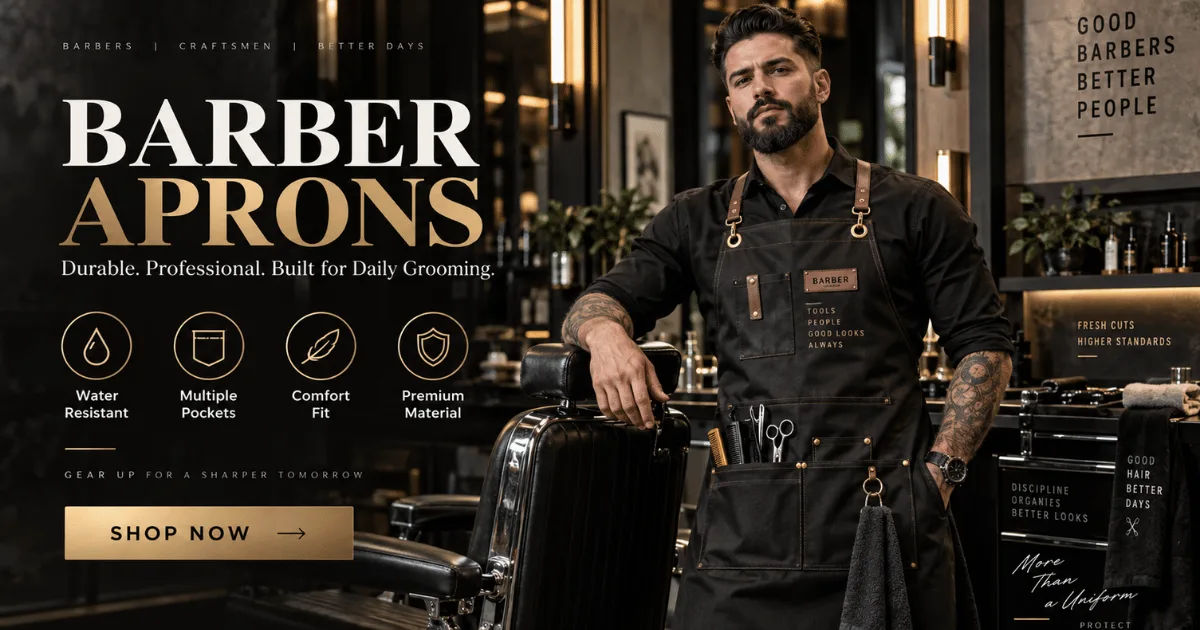
An apron may look like a simple work garment, but it can serve several purposes at once. It protects clothing, supports workplace branding, gives employees a recognizable appearance, and can even provide useful storage through pockets.
Buying aprons wholesale is especially practical when a business has several employees or operates multiple locations. Instead of purchasing individual aprons whenever someone needs one, businesses can order a consistent supply with the same colors, logo, and design.
The important question is not simply who can use aprons. It is which businesses benefit most from having aprons designed specifically for their staff and brand.
Why Businesses Choose Custom Uniform Aprons
A custom uniform aprons wholesale can protect clothing, but a customized apron can do much more.
For many businesses, employees are part of the customer experience. When staff members wear coordinated uniforms, customers can quickly identify who works there. This can make the business feel more organized and professional.
Customization also gives businesses an opportunity to reinforce their visual identity. A logo, business name, slogan, or specific color scheme can turn an ordinary apron into part of the company's uniform.
Wholesale purchasing adds another advantage. Businesses can order enough aprons for current employees while keeping extras available for new hires, replacements, or busy periods.
Restaurants and Food-Service Businesses
Restaurants are among the most common users of customized aprons.
Chefs, cooks, servers, bartenders, hosts, and other food-service employees may wear aprons as part of their daily uniform. Kitchen staff especially benefit from aprons that provide a layer of protection against spills, grease, sauces, and food particles.
A restaurant may choose different apron styles for different positions. For example, kitchen staff might need durable aprons with practical pockets, while servers may prefer lighter designs that complement the front-of-house uniform.
Adding a restaurant logo can also make the staff look more coordinated. In an open-kitchen environment, this can be particularly valuable because customers can directly see employees working.
Cafés and Coffee Shops
Coffee shops have become another major market for customized workwear.
Baristas frequently deal with coffee, milk, syrups, water, and food throughout a shift. An apron helps protect clothing while giving the café a recognizable appearance.
Cafés often have strong visual branding, making customized aprons especially useful. A carefully selected apron color combined with an embroidered or printed logo can match the café's interior, signage, cups, packaging, and other branded materials.
For small independent cafés, this can help create a memorable atmosphere without requiring a complicated uniform.
Bakeries and Dessert Businesses
Bakeries, pastry shops, cake studios, and dessert businesses also have practical reasons to use aprons.
Flour, sugar, chocolate, icing, cream, and other ingredients can easily end up on clothing. A durable apron creates a protective layer between the work and the employee's regular clothing.
Custom aprons can also support the visual style of a bakery. A traditional bakery may choose a classic design, while a modern dessert shop might prefer a minimalist apron with a clean embroidered logo.
For businesses that prepare products in front of customers, matching aprons can make employees look more professional and organized.
Catering Companies
Catering businesses often work in different locations rather than one permanent restaurant.
Their employees may serve food at weddings, corporate events, private parties, exhibitions, and other gatherings. Because the staff frequently works around clients and guests, having a coordinated uniform is important.
Wholesale apron orders make sense because catering teams can include several employees. The company can maintain a consistent appearance across different events instead of relying on whatever clothing employees happen to own.
Aprons can also carry the catering company's branding, helping guests remember the business after the event.
Hotels and Hospitality Businesses
Hotels may use customized aprons in restaurants, cafés, bars, kitchens, bakeries, room-service areas, and other departments.
Hospitality businesses usually place considerable importance on appearance. Staff members interact directly with guests, so uniforms need to look clean, coordinated, and appropriate for the environment.
A hotel may choose different apron styles for different departments while maintaining common branding elements. This allows individual teams to have practical clothing without losing a unified visual identity.
For large hospitality operations, wholesale purchasing can also simplify uniform management.
Food Trucks and Mobile Food Businesses
Food trucks have a particularly strong reason to invest in branded workwear.
The business itself may already have distinctive graphics, colors, and signage. Matching employee aprons can extend that identity directly to the people serving customers.
This is useful when employees work in crowded outdoor spaces. Customers can quickly recognize staff members, even when the service area is busy.
A branded apron can also work as a simple marketing tool. Every employee wearing the company logo becomes another visible representation of the business.
Salons and Beauty Businesses
Aprons are not limited to food-related businesses.
Hair salons, barbershops, nail studios, beauty businesses, and some spa environments can use customized aprons to protect clothing from hair, dyes, styling products, water, and other materials.
The design requirements may be different from those of a restaurant apron. Beauty professionals may prioritize lightweight fabrics, comfortable movement, adjustable straps, and a polished appearance.
Pockets can also be useful for carrying combs, clips, brushes, small tools, or other frequently used items.
A salon that focuses heavily on branding can use embroidery or subtle logo placement to create a professional look without making the uniform feel overly promotional.
Retail Stores and Specialty Shops
Retail employees do not always need traditional uniforms, but aprons can be a practical alternative.
Florists, gift shops, craft stores, garden centers, bakeries with retail counters, and specialty food shops may use aprons to distinguish employees from customers.
This is particularly helpful in stores where staff members move throughout the sales floor. Customers can immediately identify whom they can approach for assistance.
For businesses with a strong visual identity, the apron can also become part of the overall customer experience.
Florists and Garden Businesses
Florists regularly work with water, soil, leaves, stems, floral foam, and other materials that can stain clothing.
An apron provides protection while allowing employees to maintain a professional appearance when customers enter the shop.
Garden centers and plant businesses can benefit in a similar way. Employees may need clothing that can handle hands-on work while still looking presentable when assisting shoppers.
Craft Businesses and Workshops
Craft stores, pottery studios, woodworking businesses, art workshops, and maker spaces can also use customized aprons.
The type of apron required depends heavily on the activity. Some workers may need protection from dust and materials, while others may primarily need pockets for tools.
For workshops that teach customers, branded aprons can also create a more organized environment. Instructors become easier to identify, and the business gains another opportunity to display its name.
Cleaning and Maintenance Services
Cleaning companies can use aprons as part of a practical work uniform, particularly for lighter-duty cleaning environments.
An apron may provide storage for small supplies while helping protect clothing from cleaning products, dust, and minor spills.
However, businesses should distinguish ordinary uniform aprons from specialized protective equipment. An apron designed for branding and everyday work should not automatically be treated as protection against hazardous chemicals or other serious workplace risks.
Safety requirements should always determine the appropriate protective clothing.
Schools and Training Institutions
Culinary schools, hospitality programs, vocational institutions, and training centers may purchase aprons in larger quantities.
Students often need similar clothing for practical classes. A standardized apron can help create a professional learning environment while keeping clothing protected.
Schools may add the institution's name or logo, while individual programs can use different colors to distinguish departments or classes.
Wholesale purchasing is particularly convenient when a new group of students needs uniforms each academic year.
Event Staff and Promotional Teams
Companies sometimes use branded aprons for promotional events, product demonstrations, food sampling, trade shows, and community activities.
In these situations, the apron is not necessarily intended as heavy-duty workwear. Its primary role may be identification and branding.
For example, staff members distributing food samples at an exhibition can wear matching aprons featuring the company's logo. Customers can immediately recognize who represents the brand.
This makes customized aprons useful beyond permanent workplaces.
What Makes a Good Wholesale Apron?
Choosing an apron is not only about adding a logo.
The garment needs to work for the environment where employees will wear it.
Fabric and Durability
Businesses should consider how frequently the aprons will be washed and how demanding the work environment is.
A restaurant with daily kitchen operations may require a more durable fabric than a boutique retail store.
Frequent washing can gradually affect fabric, stitching, printed graphics, and embroidery. For that reason, businesses should think about long-term use rather than choosing based solely on the lowest initial price.
Comfort and Fit
Employees may wear an apron for several hours at a time.
A good design should allow normal movement without becoming unnecessarily heavy or restrictive. Adjustable straps can help accommodate different body types.
Comfort matters because uncomfortable uniforms are more likely to be adjusted, removed, or worn incorrectly during a shift.
Pockets
Pockets can make a surprisingly large difference.
Servers may use them for pens or order-related items. Baristas may need small tools. Florists and craft workers may carry scissors or other lightweight equipment.
However, pockets should be designed around the actual job. More pockets are not automatically better if they make the apron bulky.
Branding Method
Businesses generally have several ways to customize aprons, including embroidery, screen printing, heat transfer, and other decoration methods.
The best option depends on the logo, fabric, desired appearance, budget, and expected washing conditions.
Embroidery can provide a polished and durable appearance, while printing may work better for larger or more detailed graphics.
Why Wholesale Buying Makes Sense
Wholesale purchasing becomes increasingly useful as the number of employees grows.
A business with two employees may have little need for a large order. A restaurant with twenty employees, however, needs enough aprons for everyone, plus additional pieces for replacements and new staff.
Buying in larger quantities can also make uniforms more consistent. Instead of ordering slightly different products from different suppliers over time, the company can maintain the same design.
This consistency matters when employees work together in customer-facing environments.
Keep Extra Aprons Available
Businesses should not order exactly one apron per employee and assume that will always be enough.
Aprons can become stained, damaged, misplaced, or temporarily unavailable during laundering. Employees may also join or leave the company.
Keeping a reasonable supply of extras makes uniform management easier.
It can also prevent situations where one employee has a noticeably different apron from everyone else.
How to Choose the Right Supplier
Businesses should look beyond the product photograph when selecting a wholesale supplier.
Check fabric specifications, available sizes, customization options, minimum order quantities, production times, and sample policies.
If possible, ordering a sample before committing to a large quantity is a smart step. A sample allows the business to check the fabric, stitching, fit, pocket placement, logo quality, and overall comfort.
It is much easier to correct a design problem with one sample than with an entire wholesale order.
Common Mistakes Businesses Should Avoid
One common mistake is choosing an apron entirely because it looks attractive.
Appearance matters, but an apron also needs to suit the work.
Another mistake is ignoring washing requirements. A design that looks excellent when new may not remain attractive if it cannot handle the business's normal laundry routine.
Some businesses also underestimate sizing. Employees have different body shapes, so offering appropriate sizes and adjustable features can make uniforms more comfortable.
Finally, businesses should avoid treating customization as the only priority. A large logo does not compensate for poor fabric, uncomfortable straps, weak stitching, or impractical pockets.
Conclusion
Custom uniform aprons wholesale are used by far more businesses than restaurants alone. Cafés, bakeries, catering companies, hotels, food trucks, salons, retail stores, florists, craft businesses, schools, event teams, and many other organizations can benefit from them.
The main advantage is the combination of practical protection and professional presentation. An apron can protect everyday clothing while helping customers identify employees. When customized with a logo, color, or business name, it also becomes part of the company's visual identity.
Wholesale purchasing makes even more sense when a business has multiple employees or needs uniforms regularly. It can simplify ordering, improve consistency, and ensure that replacement aprons are available when needed.
The best choice, however, depends on the actual working environment. A busy kitchen has different requirements from a boutique, salon, or promotional event. Fabric durability, comfort, sizing, pockets, branding method, and washing requirements should all be considered before placing a large order.
Ultimately, a good uniform apron should not simply look branded. It should be comfortable enough for employees to wear, durable enough for the job, practical enough for daily work, and professional enough to represent the business well. When those factors are balanced, custom uniform aprons wholesale can become a useful part of both workplace operations and brand presentation.