
How should I prepare for NAD+ test Pakistan?

Preparing for a medical test can feel confusing, especially when you are unsure whether you need to fast, change your diet, or stop taking supplements. If you are planning to take a NAD+ test in Pakistan, understanding the preparation process can help you avoid common mistakes and make sure your healthcare provider receives the most useful information possible.NAD+, short for nicotinamide adenine dinucleotide, is a coenzyme found in almost every cell in the human body. 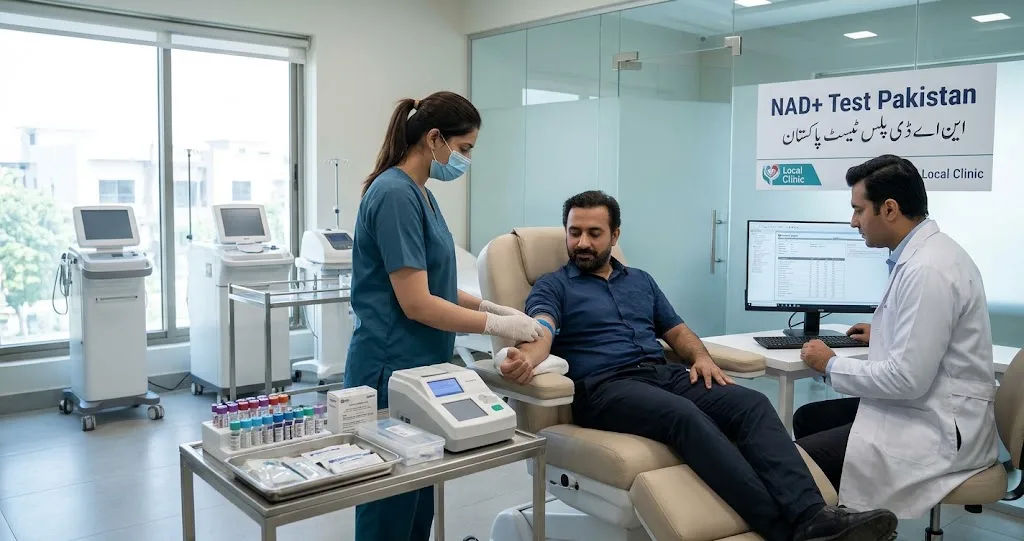 It plays an important role in energy production, cellular metabolism, DNA repair, and several processes involved in maintaining healthy cells. Because NAD+ is connected with many essential biological functions, researchers and healthcare professionals have growing interest in measuring or studying its levels.
Before scheduling a NAD+ test Pakistan, it is important to understand that preparation depends on the specific test offered by the laboratory. Some tests may measure NAD+ or related compounds in blood samples, while others may focus on different metabolic markers. Testing methods, sample requirements, and preparation instructions can vary.
This comprehensive guide explains how to prepare for the test, what to ask your laboratory, how diet and supplements may affect results, and what to do before and after your appointment.
The NAD+ Test
What Is NAD+?
NAD+ test Pakistan is a molecule that helps cells convert nutrients into usable energy. It participates in metabolic reactions that allow the body to process carbohydrates, fats, and proteins.
It also supports enzymes involved in cellular maintenance and stress responses. NAD+ exists in different forms, including its reduced form, NADH. The relationship between these molecules is important for normal cellular function.
NAD+ levels can vary between tissues and may change with age, metabolic activity, illness, and other biological factors. However, a measurement from one sample does not necessarily represent NAD+ activity throughout the entire body.
Why Might Someone Consider NAD+ Testing?
People may consider testing because they are interested in cellular health, metabolism, healthy ageing, or the effects of certain supplements.
Some individuals also seek testing while working with a healthcare professional on a broader wellness plan. In these situations, the test may be used as one part of an assessment rather than as a stand-alone diagnostic tool.
It is important to understand that NAD+ testing is not a universal screening test for every health condition. Its clinical usefulness depends on the measurement method, the reason for testing, and the evidence supporting the interpretation of the results.
Is NAD+ Testing Available in Pakistan?
Availability depends on the laboratory, the test method, and whether the facility performs the analysis locally or sends samples to another laboratory.
Before booking a NAD+ test in Pakistan, contact the provider directly to confirm that the exact test is available. Ask whether it measures NAD+ itself, NADH, a combined NAD-related measurement, or another biomarker associated with cellular metabolism.
This distinction matters because different tests may produce results that cannot be compared directly.
1. Confirm the Laboratory's Preparation Instructions
The first and most important preparation step is to obtain instructions from the laboratory that will analyse your sample.
Do not assume that every NAD+ test requires the same preparation. A laboratory measuring a specialised metabolic marker may have different requirements from a facility offering a standard blood chemistry test.
Ask the laboratory to explain the following points:
-
Whether fasting is necessary.
-
How many hours you should fast, if required.
-
Whether plain water is permitted.
-
Whether you should take your regular medicines as usual.
-
Whether vitamins, minerals, or NAD-related supplements need special consideration.
-
Whether the sample must be collected at a particular time.
-
Whether the sample requires special handling or rapid processing.
If the laboratory provides written instructions, read them carefully before your appointment.
When instructions are unclear, contact the laboratory instead of relying on general advice from websites or social media. The correct preparation depends on the actual test being performed.
2. Understand Whether Fasting Is Necessary
Does NAD+ Testing Require Fasting?
Fasting requirements vary according to the assay and the laboratory's protocol. There is no single fasting rule that applies to every test involving NAD+.
Food intake can affect several metabolic measurements. A laboratory may therefore request fasting to standardise conditions or reduce the influence of a recent meal.
However, you should not automatically fast for eight, ten, or twelve hours unless the laboratory specifically instructs you to do so.
Unnecessary fasting may cause discomfort, dizziness, or other problems, particularly for people with diabetes or certain medical conditions.
What Can You Drink Before the Test?
If fasting is required, plain water is often allowed, but you should confirm this with the laboratory.
Avoid assuming that tea, coffee, milk, juice, energy drinks, or flavoured beverages are permitted during a fasting period. These drinks may contain substances that affect metabolic measurements or violate the laboratory's instructions.
If you take medication with food or have a condition that makes fasting difficult, discuss the situation with your healthcare professional before changing your eating schedule.
What If You Accidentally Eat Before Testing?
If you eat when you were instructed to fast, tell the laboratory staff before the sample is collected.
They can determine whether the sample can still be used or whether rescheduling is more appropriate. Being honest about your preparation is more useful than concealing a mistake.
3. Review Your Supplements Before the Appointment
NAD+ and Related Supplements
NAD-related supplements are commonly marketed for energy, healthy ageing, and cellular wellness. Examples include nicotinamide riboside (NR), nicotinamide mononucleotide (NMN), and certain forms of vitamin B3.
These compounds are related to NAD metabolism, but they are not identical to NAD+ itself.
Depending on the test method, recent supplement use may be relevant when interpreting a measurement. The extent of the effect cannot be assumed to be the same for every assay.
If you currently take NAD-related supplements, tell your healthcare professional and laboratory before testing.
Should You Stop Taking Supplements?
Do not automatically stop every supplement before the test. Equally, do not assume that continuing them will have no effect.
Ask the laboratory whether the test is intended to measure your usual biological status while taking your current supplements or whether a different preparation protocol is recommended.
Your healthcare professional can help you decide whether any temporary change is appropriate.
Never discontinue prescribed treatment simply to obtain a particular test result.
Make a Supplement List
Prepare a written list that includes:
-
The name of each supplement.
-
The dose you usually take.
-
How often you take it.
-
When you last took it.
-
The reason you use it, if relevant.
Include multivitamins, vitamin B3 products, herbal preparations, and any products promoted for cellular energy.
This information helps your healthcare professional interpret the results in context.
4. Maintain Your Usual Diet Before Testing
Your diet supports normal metabolism, but making sudden dietary changes before a test can make your results harder to interpret.
In the days leading up to your appointment, aim to follow your usual balanced eating pattern unless the laboratory gives different instructions.
Include a reasonable variety of vegetables, fruits, whole grains, protein sources, and healthy fats. Drink adequate water and avoid extreme dietary restrictions.
Avoid Last-Minute Diet Changes
Do not begin a crash diet, prolonged fast, or unusually restrictive eating plan just before your appointment to improve your results.
Likewise, avoid deliberately consuming large amounts of particular foods or supplements in the hope of increasing NAD+ levels before the sample is collected.
The purpose of testing is to obtain meaningful information, not to manipulate a laboratory measurement.
What About Pakistani Foods?
There is generally no need to eliminate familiar foods such as roti, rice, lentils, vegetables, eggs, fish, or chicken unless your healthcare professional or laboratory gives specific dietary instructions.
The most important consideration is consistency with the required preparation protocol.
If fasting is required, follow the laboratory's rules about the timing of your last meal. If fasting is not required, maintain your usual eating routine rather than making unnecessary changes.
5. Pay Attention to Exercise and Physical Activity
Physical activity affects energy metabolism and several biological processes. Depending on the type of assay, recent strenuous exercise may be relevant to the interpretation of certain metabolic measurements.
For this reason, ask your laboratory whether it recommends avoiding intense exercise before sample collection.
If the laboratory advises you to avoid strenuous activity, follow its specified time frame. Do not assume that every NAD+ test requires the same exercise restriction.
Gentle walking and ordinary daily activities may be acceptable, but your laboratory's instructions should take priority.
Avoid Unusual Physical Stress
Do not schedule an unusually demanding workout immediately before your appointment if you have been advised to keep your routine stable.
Similarly, avoid using extreme exercise as a strategy to change your test results.
Tell your healthcare professional if you recently completed strenuous training, experienced unusual physical exertion, or had difficulty recovering from exercise.
These details may help provide context when reviewing your results.
6. Get Enough Sleep and Manage Stress
Sleep supports many biological processes, including energy regulation, hormonal activity, and cellular maintenance.
Although a specific sleep duration has not been established as a universal requirement for NAD+ testing, maintaining your normal sleep schedule can help make your preparation more consistent.
Try to get adequate rest on the night before your appointment.
Avoid deliberately staying awake for long periods or making major changes to your sleeping schedule in an attempt to influence the result.
Stress can also affect several aspects of normal physiology. Simple measures, such as allowing enough time to reach the laboratory and avoiding unnecessary rushing, may make the appointment more comfortable.
You do not need to eliminate every source of stress before testing. Instead, focus on following the preparation instructions and reporting any relevant circumstances accurately.
7. Review Medicines and Existing Health Conditions
Before your NAD+ test in Pakistan, inform your healthcare professional about your current medicines and medical history.
Certain health conditions can affect metabolism, while medicines may influence biological pathways or other laboratory measurements. The significance of these factors depends on the specific test.
Provide information about any relevant conditions, recent illnesses, and ongoing treatments.
If you have diabetes, kidney disease, liver disease, or another chronic condition, ask whether any special preparation is necessary.
Should You Take Your Medicines on Test Day?
There is no universal instruction to stop or continue every medicine specifically for NAD+ testing.
For many blood tests, regular medicines are continued, but the appropriate approach depends on the individual and the test requirements.
Do not skip prescribed doses without professional advice. If a medicine must be taken with food, explain this to your healthcare professional before beginning any fasting period.
If you use insulin or another medicine that can cause low blood sugar, fasting requires particular care. Follow an individualised plan provided by your treating clinician.
Report Recent Illness
Tell the laboratory or healthcare professional if you have recently experienced a fever, infection, surgery, or another significant illness.
Such events can affect the body's metabolism and may influence the interpretation of some measurements.
Your healthcare professional can decide whether testing should proceed as scheduled or whether another time would provide more useful information.
8. Choose the Right Time for Sample Collection
Some laboratory tests require collection at a particular time of day, while others have no specific timing requirement.
Before booking, ask whether the NAD+ assay must be performed in the morning or whether an appointment at another time is acceptable.
If timing matters, choose an appointment that allows you to follow the preparation instructions comfortably.
For example, if fasting is required, a morning appointment may make the fasting period easier to manage. However, this should not be treated as a universal requirement for all NAD+ measurements.
If you are taking supplements, ask whether the laboratory needs to know the time of your last dose.
Consistency in sample collection may also matter if you repeat the test later. When possible, follow the same laboratory protocol and comparable collection conditions for each measurement.
9. Prepare for Sample Collection and Transport
NAD+ is a specialised biological measurement, so sample handling may be important. The appropriate collection tube, processing method, storage conditions, and transport requirements depend on the assay.
Ask the laboratory whether the sample is collected on-site and whether any special handling procedures apply.
If the test is sent to an external facility, ask how the sample is processed and transported.
Do not collect, store, or transport a specimen yourself unless the laboratory explicitly provides instructions and appropriate materials.
What Should You Bring?
For a smooth appointment, prepare the following items:
-
Your identification and any required registration details.
-
The test request or referral, if applicable.
-
A list of medicines and supplements.
-
Relevant previous laboratory reports.
-
The laboratory's preparation instructions.
-
Payment or insurance information, if required.
Arrive with enough time to complete registration and confirm that you have followed the required preparation steps.
If you are unsure whether you have met a requirement, tell the laboratory staff before collection.
10. Understand What Happens During the Test
The procedure depends on the type of NAD+ measurement being offered.
If the laboratory uses a blood sample, a trained professional will usually collect the specimen using standard blood collection equipment.
You may experience brief discomfort when the needle is inserted. Mild tenderness or a small bruise can occur, as with other blood tests.
If you feel faint during blood collection or have previously experienced difficulty with needles, tell the staff before the procedure begins.
Follow the collection professional's instructions and avoid touching the sampling equipment or collection site unnecessarily.
After the sample is collected, the laboratory processes it according to the assay's requirements. The time needed to receive the result varies by laboratory and testing method.
Ask when your report is expected and whether a healthcare professional will help interpret it.
11. Understand the Limitations of NAD+ Testing
An important part of preparation is understanding what the test can and cannot tell you.
NAD+ is involved in many biological processes, but a single measurement does not provide a complete picture of cellular health.
The result may depend on the type of sample, the laboratory method, sample handling, and the specific form of NAD-related material being measured.
A blood measurement also may not directly reflect levels in every organ or tissue.
Does a Low Result Always Mean Poor Health?
No. A result outside a laboratory's expected range does not automatically establish a disease or prove that you need a supplement.
The meaning of the result depends on the test's validation, reference information, and the person's broader health situation.
Likewise, a result within the reported range does not guarantee that every aspect of cellular metabolism is functioning optimally.
Can NAD+ Testing Explain Fatigue?
Fatigue can have many causes, including inadequate sleep, anaemia, thyroid disorders, nutritional deficiencies, medication effects, and other medical conditions.
An NAD+ measurement alone cannot reliably identify the cause of unexplained fatigue.
If you have persistent tiredness, weakness, or other concerning symptoms, consult a qualified healthcare professional. They can determine whether conventional tests or further assessment are appropriate.
Is NAD+ Testing a Diagnostic Test for Ageing?
NAD+ research includes investigations into ageing and cellular function. However, measuring NAD+ should not be interpreted as a definitive test of biological age or a reliable prediction of lifespan.
Be cautious of claims that promise to diagnose ageing, predict disease, or determine the exact supplements needed to reverse cellular decline based on a single result.
Ask the provider what the test has been validated to measure and how its findings should be used in clinical practice.
12. What to Do After the Test
Once the sample has been collected, ask when the report will be available and how you will receive it.
If you followed a fasting protocol, you can usually return to your normal eating routine unless your healthcare professional has given other instructions.
Continue prescribed medicines according to your treatment plan. Do not begin high-dose supplements simply because you have completed the test.
When the report arrives, review it with a qualified healthcare professional who understands the test method and its limitations.
Ask for an explanation of the measured marker, the units, the reference information, and whether the result has an established clinical meaning.
If the result is unexpected, avoid making immediate decisions based on a single number. Your clinician may consider repeating the test under comparable conditions or investigating other possible explanations.
13. Common Mistakes to Avoid Before Testing
A few simple mistakes can make preparation more difficult or reduce the usefulness of the information provided to your healthcare team.
Assuming fasting is always required: Confirm the exact fasting instructions rather than following a generic rule.
Stopping prescribed medicines: Never change a treatment plan without professional advice.
Taking extra supplements: Do not increase NAD-related supplements before testing in an attempt to improve your result.
Ignoring recent illness: Tell your healthcare professional about significant health changes that could affect interpretation.
Changing your diet dramatically: Keep your usual eating pattern unless specific dietary instructions have been provided.
Overlooking sample handling: Confirm that the laboratory follows the appropriate collection and processing protocol for its assay.
Interpreting the result without context: A laboratory value should be considered alongside the method used, relevant symptoms, medical history, and other clinical information.
Avoiding these mistakes can help you prepare more confidently and have a more useful discussion with your healthcare professional.
14. Questions to Ask Before Booking an NAD+ Test in Pakistan
Before paying for a specialised test, make sure you understand what you are purchasing.
Consider asking the laboratory or healthcare provider these questions:
-
What exactly does the test measure: NAD+, NADH, or another related marker?
-
What type of sample is required?
-
Is fasting necessary, and how long should it last?
-
Should I change the timing of any supplements?
-
Are there restrictions on exercise, food, or beverages?
-
Does the sample need special processing or transport?
-
Is the test performed locally or sent to another laboratory?
-
What method is used to analyse the sample?
-
Are the results supported by an established reference range?
-
Who will explain the report and its clinical significance?
-
How long will it take to receive the results?
-
What is the total cost, including any sample transport or consultation fees?
These questions are especially useful when a provider offers a specialised wellness test but provides limited information about its laboratory methods.
A trustworthy provider should be willing to explain the test's purpose, preparation requirements, limitations, and reporting process.
Conclusion
Preparing for a NAD+ test in Pakistan starts with understanding the exact measurement being performed and following the laboratory's instructions. Although NAD+ plays an important role in cellular energy production and metabolism, different testing methods may require different preparation procedures.
The most useful approach is to confirm fasting requirements, review supplement use, maintain a reasonably consistent diet, follow any exercise restrictions, and discuss medicines or medical conditions with your healthcare professional. You should also ask about sample collection, processing, transport, and the expected time for receiving your report.
Avoid making sudden lifestyle changes or taking extra supplements in an attempt to influence the result. These actions may complicate interpretation rather than provide a more accurate picture of your usual biological status.
Remember that NAD+ testing has limitations. A single measurement cannot explain every symptom, establish your overall cellular health, or determine your biological age with certainty. Its usefulness depends on the assay, the quality of the sample, the available evidence, and the clinical context.
Before booking, choose a laboratory that clearly explains its procedures and can tell you exactly what its test measures. After testing, discuss the findings with a qualified healthcare professional instead of relying on the result alone.
With appropriate preparation, clear communication, and realistic expectations, you can approach your NAD+ test with greater confidence and make better-informed decisions about your health.