
Should Preschool Curriculum include phonics?

Early childhood education plays an important role in shaping a child's language, communication, and reading abilities. During the preschool years, children begin recognizing sounds, learning new words, understanding spoken language, and developing an interest in books. These early experiences help prepare them for formal education. One important question parents and educators often consider is whether phonics should be part of early learning or introduced only when children enter primary school.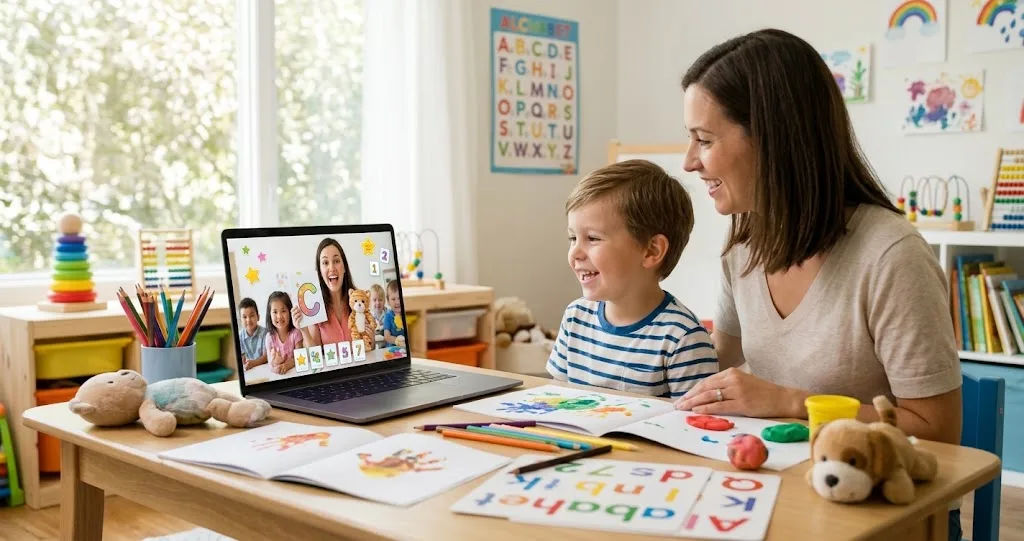
A well-designed Preschool Curriculum should provide children with opportunities to explore language naturally while developing the foundational skills needed for reading and writing. Phonics can support this process by teaching children how letters connect with sounds. Through playful activities, songs, storytelling, and simple word games, young learners can begin understanding how spoken and written language work together.
However, including phonics in preschool does not mean expecting three- or four-year-old children to read complicated sentences or memorize extensive spelling rules. Instead, the goal should be to introduce basic sound awareness in an enjoyable, age-appropriate way. Children learn best when educational activities match their developmental stages and allow them to discover new concepts through exploration.
Understanding the benefits, teaching methods, and appropriate timing of phonics can help parents and teachers make better decisions about early literacy education. This guide explores why phonics matters, how it can be included in preschool learning, and what educators should consider when designing an effective early childhood program.
Phonics in Early Childhood Education
Phonics is a method of teaching children how letters and groups of letters represent individual sounds. It helps young learners understand the relationship between written symbols and spoken language.
For example, children may learn that the letter B represents the sound heard at the beginning of words such as ball, banana, and butterfly. By recognizing these connections, they gradually develop the ability to identify unfamiliar words.
Phonics is an important part of early literacy because it provides children with tools for understanding written language. Rather than simply memorizing entire words, children begin recognizing patterns that help them read new words independently.
What Does Phonics Teaching Involve?
Phonics instruction usually begins with simple activities that introduce children to letters and their corresponding sounds.
Teachers may introduce one letter at a time, demonstrate its sound, and show pictures of familiar objects beginning with that sound. For example, an activity about the letter M might include pictures of a moon, monkey, and mango.
Children can also practice identifying sounds in everyday conversations. Teachers might ask them to identify words that begin with the same sound or listen carefully to the sounds they hear in familiar names.
These activities create a foundation for more advanced reading instruction later.
Phonics Versus Memorizing Letters
Learning the alphabet and learning phonics are connected, but they are not exactly the same.
Alphabet recognition helps children identify letters by their names and shapes. Phonics teaches them the sounds those letters represent.
A child might recognize the letter S without understanding the sound it makes. Phonics activities help establish that connection.
Both skills are valuable, and they should develop together through regular practice and meaningful experiences.
Why Should Preschool Curriculum Include Phonics?
Including phonics in early childhood education can provide several benefits when it is introduced appropriately. Children become familiar with the building blocks of language before they encounter more demanding reading activities.
A balanced Preschool Curriculum should not focus exclusively on phonics. Instead, it should combine sound awareness with storytelling, speaking, listening, creative play, and social interaction.
The following benefits explain why phonics deserves attention during the preschool years.
1. Develops Early Reading Readiness
One of the main benefits of phonics is that it prepares children for learning to read.
Preschoolers who become familiar with letter sounds may find it easier to understand basic reading concepts when they enter primary school.
They begin recognizing that printed letters represent sounds and that these sounds can be combined to form words.
For example, a teacher may introduce the sounds /c/, /a/, and /t/ separately before demonstrating how they combine to form the word cat.
At the preschool stage, children do not need to master every sound combination. Simply becoming familiar with the relationship between letters and sounds can provide a useful starting point.
2. Improves Listening Skills
Phonics activities encourage children to listen carefully and recognize differences between sounds.
This ability is particularly important because spoken language contains many sounds that young learners must distinguish.
Teachers can organize simple listening games in which children identify words beginning with particular sounds.
For example, children may listen to the words sun, sock, and sandwich and recognize that they share the same beginning sound.
These exercises encourage concentration and help children become more aware of spoken language.
3. Builds Phonological Awareness
Phonological awareness refers to the ability to recognize and work with the sounds within spoken language.
It includes recognizing rhymes, identifying syllables, noticing beginning sounds, and eventually understanding individual sounds within words.
Phonological awareness is closely connected to early reading development.
Children can practice it through nursery rhymes, clapping games, songs, and storytelling activities.
For instance, a teacher might say two words, such as cake and snake, and ask children whether they sound similar at the end.
Such activities make sound recognition enjoyable without requiring formal reading lessons.
4. Encourages Language Development
Phonics can also contribute to children's broader language development.
When children participate in sound-based activities, they encounter new vocabulary and learn how words are pronounced.
Teachers can introduce unfamiliar words through pictures, objects, and conversations.
For example, an activity about the letter F might introduce words such as flower, feather, fish, and forest.
Children can discuss these objects, describe their appearance, and use the new vocabulary in simple sentences.
This approach combines literacy development with communication skills.
5. Builds Confidence in Learning
Children often feel more confident when they recognize something they have previously learned.
When preschoolers identify familiar letters or recognize sounds in everyday words, they may become more interested in reading activities.
Small achievements can encourage them to participate more actively.
Teachers should celebrate effort rather than expecting every child to produce perfect answers.
Positive encouragement creates a supportive learning environment where children feel comfortable making mistakes and trying again.
How to Introduce Phonics in a Preschool Classroom
Introducing phonics requires careful planning. Young children have different attention spans, interests, and developmental abilities.
Teachers should use short, interactive activities instead of lengthy lessons that require children to sit quietly for extended periods.
A thoughtful Preschool Curriculum can introduce phonics through everyday classroom experiences without making learning feel overly formal.
Start With Familiar Letter Sounds
Children usually find it easier to understand sounds connected to objects they already know.
Teachers can begin with familiar letters and use pictures or classroom objects to demonstrate their sounds.
For example:
-
A for apple.
-
B for ball.
-
C for cat.
-
D for dog.
-
M for mango.
The purpose is not to teach every letter immediately. Teachers should introduce new sounds gradually and provide enough opportunities for children to revisit previously learned material.
Use Songs and Rhymes
Songs and rhymes are effective tools for introducing sound patterns.
Children naturally enjoy repeating rhythms, singing familiar words, and participating in group activities.
Alphabet songs can help children recognize letter names, while rhyming songs develop awareness of similar sounds.
Teachers can also create simple songs using the sounds introduced during the week.
Repetition helps children become familiar with language patterns while keeping classroom activities enjoyable.
Include Picture-Based Learning
Pictures help preschoolers connect sounds with real objects and familiar experiences.
Teachers can prepare picture cards showing objects that begin with specific letters.
Children can identify the objects, say their names, and listen for their beginning sounds.
For example, a collection of pictures might include a ball, banana, bird, and boat.
This visual approach supports children who learn more effectively through images and hands-on experiences.
Organize Sound Recognition Games
Games make phonics more engaging and encourage children to participate.
A teacher might ask children to find something in the classroom that begins with the sound /b/.
They could identify a book, bag, or block.
Another activity involves placing picture cards on a table and asking children to group objects that begin with similar sounds.
These activities develop sound recognition while also encouraging movement, cooperation, and problem-solving.
Important Phonics Skills Preschoolers Should Learn
Phonics instruction should progress gradually. Children need opportunities to understand basic language concepts before moving toward more challenging reading activities.
A suitable Preschool Curriculum can organize phonics learning into several stages.
Letter Recognition
Letter recognition is one of the earliest skills children develop.
They learn to identify letters by their shapes and names. Teachers can use alphabet puzzles, magnetic letters, coloring sheets, and classroom displays to support this process.
Children should gradually become familiar with both uppercase and lowercase letters.
However, teachers should avoid rushing through the alphabet. Repeated exposure is more valuable than memorizing letters quickly without understanding them.
Beginning Sounds
Once children become familiar with some letters, teachers can introduce their beginning sounds.
For example, children may learn that ball, bed, and bus begin with the same sound.
This helps them understand that different words can share similar sound patterns.
Teachers can make the activity more interesting by asking children to identify objects beginning with a particular sound.
Rhyming Words
Rhyming is another useful early literacy skill.
Children can learn to recognize words that have similar ending sounds, such as:
-
Cat and hat.
-
Sun and fun.
-
Bee and tree.
-
Cake and snake.
Rhyming games develop listening abilities and introduce children to the sound patterns found in language.
Teachers should emphasize listening and speaking rather than requiring children to spell these words.
Simple Sound Blending
Sound blending involves combining individual sounds to make a complete word.
For example, a teacher might slowly say the sounds /m/, /a/, and /p/ and then demonstrate how they form the word map.
Some preschoolers may begin understanding simple blending activities, while others may need additional time.
Teachers should introduce this skill when children show readiness rather than treating it as a compulsory achievement for every learner.
The Role of Play-Based Learning in Phonics
Play is an essential part of early childhood education. Young children often learn more effectively when they can explore concepts through activities that feel natural and enjoyable.
Phonics should therefore be connected to play instead of being treated as a separate academic requirement.
Learning Through Toys and Objects
Classroom toys can provide useful opportunities for sound recognition.
Teachers might organize a collection of toy animals and ask children to identify their names and beginning sounds.
A toy lion, for example, can introduce the sound associated with L.
Children can also sort objects, build words with letter blocks, and explore alphabet puzzles.
These activities encourage active participation and help children connect literacy concepts with familiar experiences.
Outdoor Phonics Activities
Phonics does not need to remain inside the classroom.
Outdoor activities can provide opportunities for children to identify sounds in their surroundings.
Teachers might ask them to find leaves, stones, flowers, or other objects beginning with familiar sounds.
Children can also listen to birds, identify environmental sounds, and discuss the words they hear.
These experiences combine literacy with exploration and physical activity.
Storytelling and Shared Reading
Storytelling is one of the most valuable ways to develop early literacy.
Teachers can read illustrated books aloud, emphasize repeated sounds, and encourage children to identify familiar letters.
For example, a story containing repeated words beginning with B can provide opportunities to discuss that sound.
Children should also have opportunities to ask questions, describe pictures, and predict what might happen next.
Shared reading develops vocabulary, comprehension, listening, and a positive relationship with books.
Should Phonics Be Taught to Every Preschool Child?
Although phonics offers important benefits, every child develops at a different pace.
Some preschoolers may quickly recognize letters and sounds, while others may still be developing basic communication and listening skills.
A good educational program should recognize these differences.
Understanding Individual Readiness
Children should not be expected to develop literacy skills according to exactly the same schedule.
Their progress can be influenced by language exposure, developmental differences, previous learning experiences, and individual interests.
Teachers should observe how children respond to activities and adjust instruction accordingly.
A child who enjoys identifying letters may benefit from additional sound games, while another child may need more opportunities to develop vocabulary and listening skills.
Avoiding Academic Pressure
Phonics should support learning rather than create unnecessary stress.
Preschool is not intended to turn young children into advanced readers before they are developmentally ready.
Excessive worksheets, memorization, and testing can make literacy activities feel unpleasant.
Instead, educators should use encouragement, repetition, and playful instruction.
Children should feel that discovering new sounds is an enjoyable experience.
Supporting Different Learning Styles
Some children respond well to pictures, while others prefer songs, movement, or hands-on activities.
Teachers should include different approaches so that children have several ways to understand the same concept.
For example, a lesson about the letter T could include:
-
Looking at pictures of familiar objects.
-
Singing a song featuring the sound.
-
Tracing the letter with fingers.
-
Finding classroom objects beginning with T.
-
Building the letter using play dough.
Providing different learning experiences makes phonics more accessible.
How Parents Can Support Phonics at Home
Parents play an important role in developing early literacy skills.
Children do not need formal lessons at home to benefit from phonics. Simple conversations and everyday activities can provide valuable opportunities to explore language.
Read Together Every Day
Reading illustrated books together helps children become familiar with printed words and spoken language.
Parents can point to pictures, discuss familiar objects, and emphasize interesting sounds.
They can also encourage children to repeat simple words or identify familiar letters.
Even a short reading session can create positive learning experiences.
Talk About Letters in Everyday Life
Parents can introduce letter sounds during ordinary activities.
For example, while preparing breakfast, they might discuss the beginning sound of bread, butter, or banana.
During a shopping trip, children can look for familiar letters on packaging and signs.
These small interactions show children that language and literacy are connected to everyday life.
Play Simple Word Games
Families can play games involving rhyming, beginning sounds, and object recognition.
Parents might ask children to name something that rhymes with a familiar word or identify objects beginning with a particular sound.
These activities should remain relaxed and enjoyable.
There is no need to turn every conversation into a lesson.
Encourage Questions and Conversations
Children develop language skills when adults listen to them and respond thoughtfully.
Parents should encourage children to describe their experiences, ask questions, and explain what they see.
A strong foundation in spoken language supports later reading comprehension and communication.
Common Mistakes to Avoid When Teaching Preschool Phonics
Although phonics can be valuable, poor teaching methods may reduce its effectiveness.
Educators and parents should understand common mistakes before introducing structured literacy activities.
Teaching Too Many Letters at Once
Introducing too many letters in a short period can overwhelm young learners.
Children need sufficient time to recognize each letter and become familiar with its sound.
Teachers should introduce new concepts gradually and revisit familiar material regularly.
Relying Only on Worksheets
Worksheets can support learning, but they should not become the main method of phonics instruction.
Young children need movement, interaction, conversation, and opportunities to explore physical objects.
A balanced approach includes games, storytelling, creative activities, and simple written exercises when appropriate.
Ignoring Listening and Speaking Skills
Reading development depends on more than recognizing printed letters.
Children also need vocabulary, listening comprehension, and opportunities to communicate.
Teachers should ensure that phonics activities do not replace storytelling, conversations, songs, and other language experiences.
Comparing Children's Progress
Comparing one child's literacy development with another's can create unnecessary pressure.
Children have different strengths and learning needs.
Teachers should focus on individual progress and provide suitable support rather than expecting everyone to achieve identical results at the same time.
What Makes a Balanced Preschool Literacy Program?
An effective early childhood literacy program combines phonics with other important developmental experiences.
The purpose is to prepare children for future academic learning while supporting their emotional, social, physical, and intellectual development.
A balanced Preschool Curriculum should include several interconnected learning areas.
Language and Communication
Children should have opportunities to listen, speak, describe objects, ask questions, and participate in conversations.
These activities strengthen vocabulary and help children communicate their ideas clearly.
Early Reading Experiences
Shared reading, picture books, storytelling, and alphabet recognition help children develop an interest in written language.
Phonics activities can complement these experiences by introducing connections between sounds and letters.
Creative Expression
Drawing, painting, music, and imaginative play encourage creativity while supporting language development.
For example, children can draw objects beginning with a particular sound and explain their pictures to classmates.
Social and Emotional Development
Group games and shared reading activities help children develop patience, cooperation, confidence, and communication skills.
These abilities are important for classroom participation and future academic success.
Physical and Cognitive Development
Preschoolers also need activities that develop coordination, movement, memory, and problem-solving.
A well-rounded educational program should balance literacy with physical play, mathematics, exploration, and creative experiences.
How Educators Can Measure Early Phonics Progress
Assessing phonics development in preschool should be simple, supportive, and appropriate for children's ages.
Formal examinations are generally unnecessary for measuring early sound awareness.
Instead, teachers can observe how children participate in everyday learning activities.
Classroom Observation
Teachers can observe whether children recognize familiar letters, identify beginning sounds, and participate in rhyming activities.
These observations help educators understand which skills children are developing and where additional support may be useful.
Informal Learning Activities
Picture sorting, alphabet games, storytelling, and sound recognition activities can provide useful information about progress.
Teachers can record children's participation and note improvements over time.
Communicating With Parents
Regular communication helps parents understand what children are learning in school.
Teachers can suggest simple activities families can practice at home without creating additional academic pressure.
Working together creates consistency between classroom and home learning experiences.
Conclusion
Phonics can be a valuable part of early childhood education when it is introduced through age-appropriate and enjoyable activities. It helps children understand the relationship between letters and sounds, develop listening abilities, recognize language patterns, and prepare for future reading experiences. These foundational skills can make the transition to primary school more comfortable.
However, phonics should never become the only priority during the preschool years. Young children need opportunities to develop communication, creativity, social awareness, physical coordination, and emotional confidence. Storytelling, songs, picture books, imaginative play, and everyday conversations are equally important parts of a successful early learning experience.
An effective Preschool Curriculum introduces phonics gradually and adapts activities to children's individual developmental needs. Teachers should focus on sound awareness, familiar letters, rhyming, and simple blending rather than expecting every child to read independently before entering primary school. Learning should remain flexible, interactive, and encouraging.
Parents can strengthen these experiences by reading with their children, discussing everyday objects, playing word games, and encouraging conversations at home. Even small activities can help children become more comfortable with language and develop curiosity about reading.
Ultimately, including phonics in preschool is a positive educational choice when it is balanced with other important learning experiences. The objective is not to rush children into formal academics but to give them a strong foundation for future success. With thoughtful teaching, supportive families, and a play-based approach, phonics can become a natural and enjoyable part of early childhood development.